
Implemented
TheVitaliks ERC-721
Compact DNA, base roll, Hoodie cap, Chop Shop and sequential trait evolution.
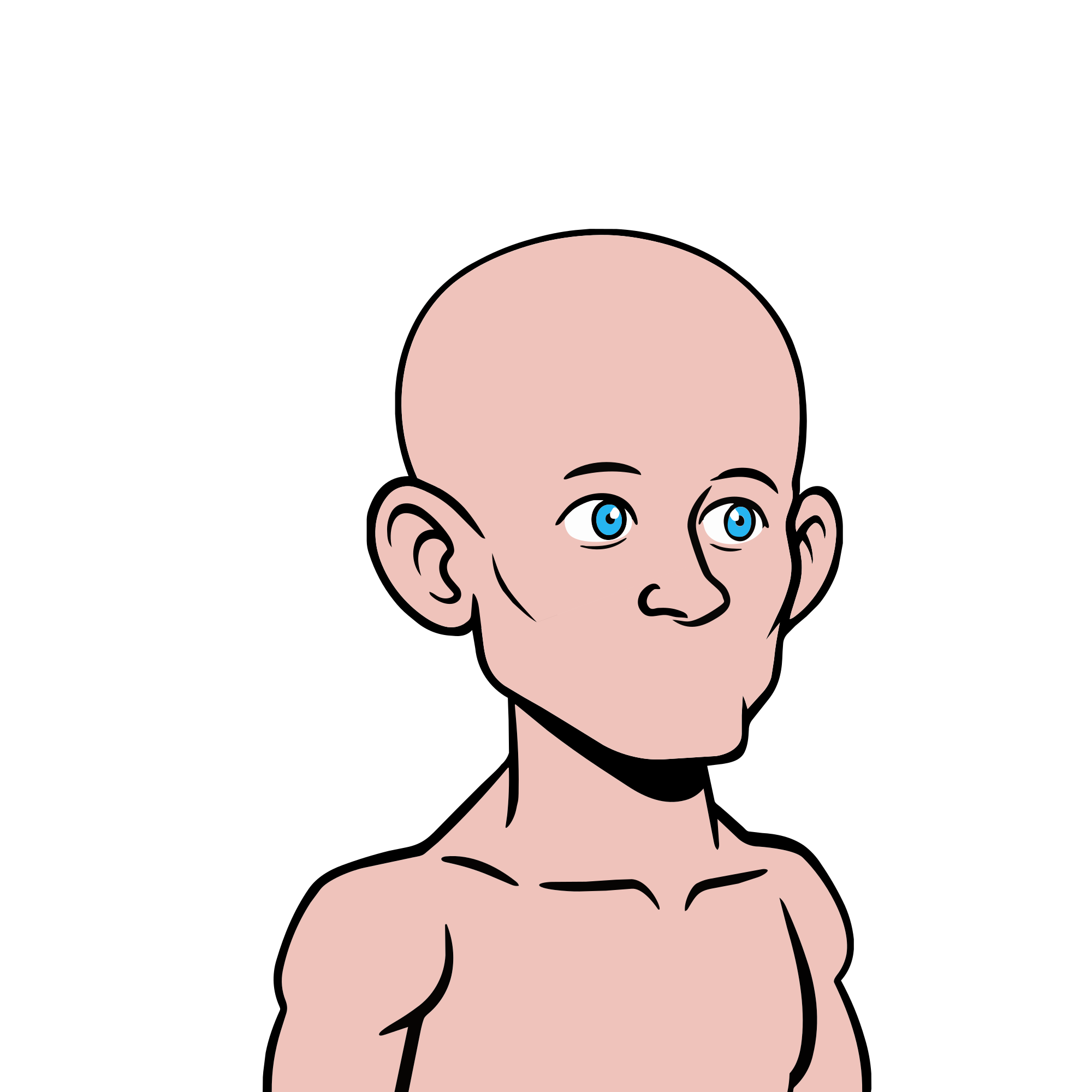
Started on June 15, 2025, before Ethereum's 10th anniversary. Each Vitalik stores a canonical identity, renders it from SVG layers and lets culture move without erasing where it began.
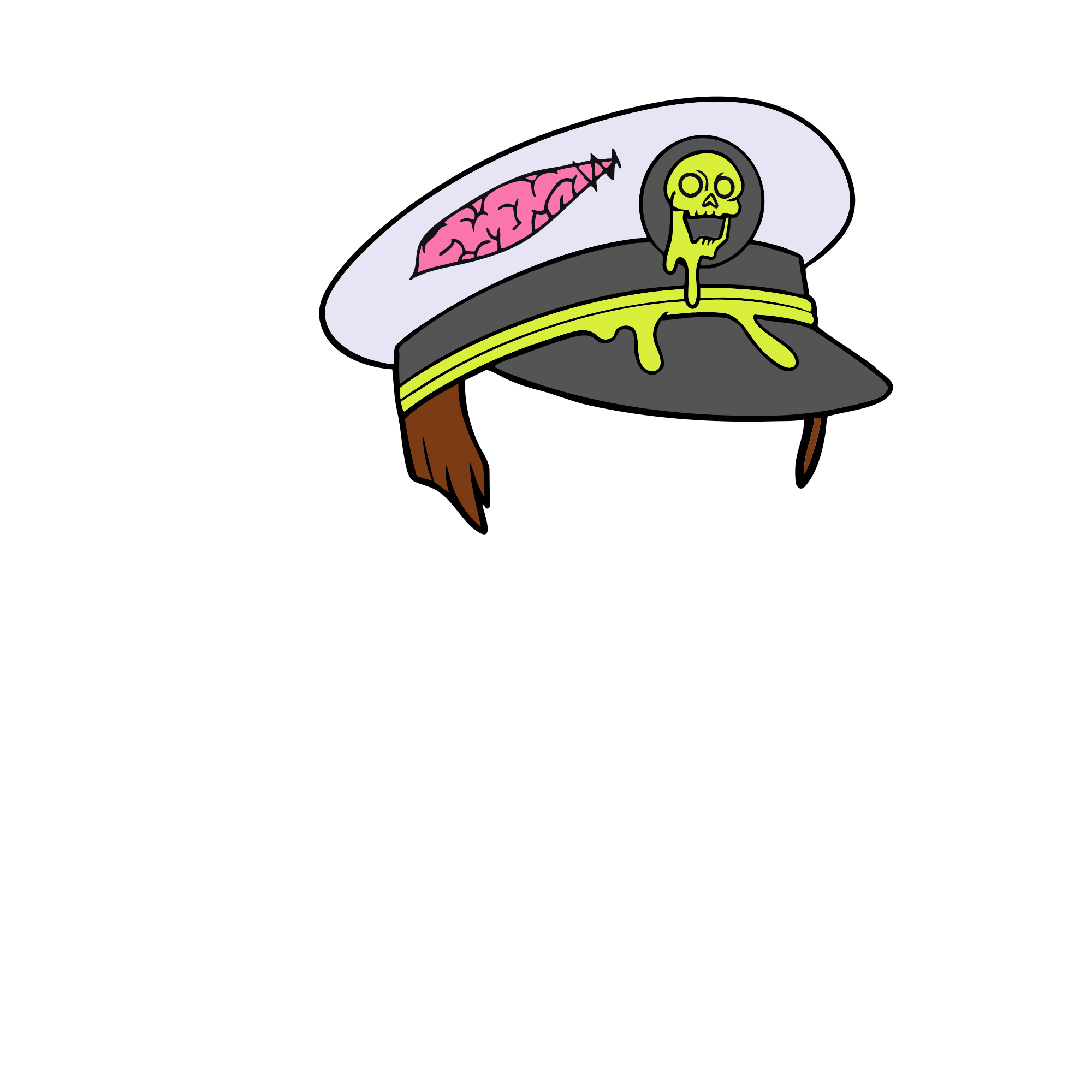 V1
V1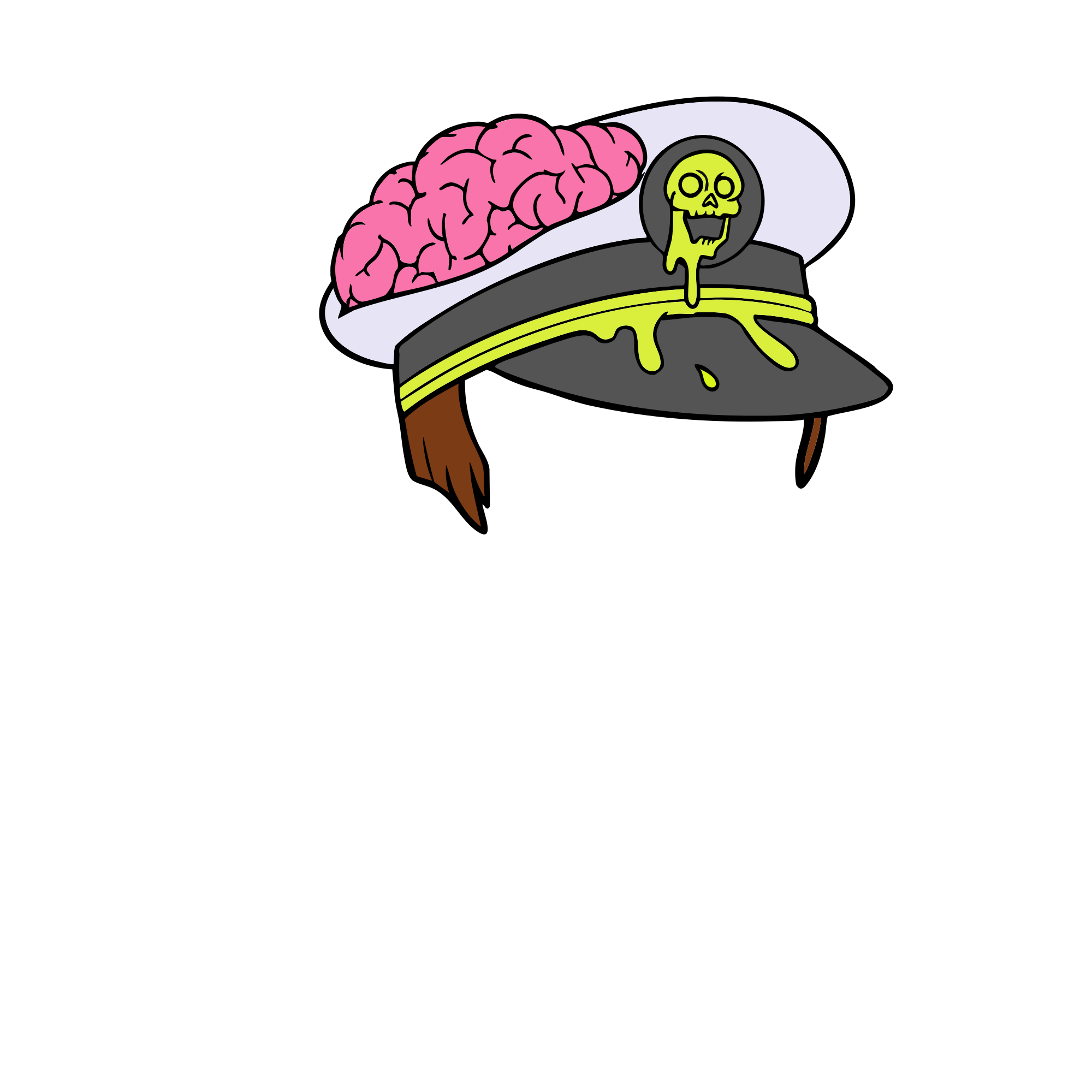 V2
V2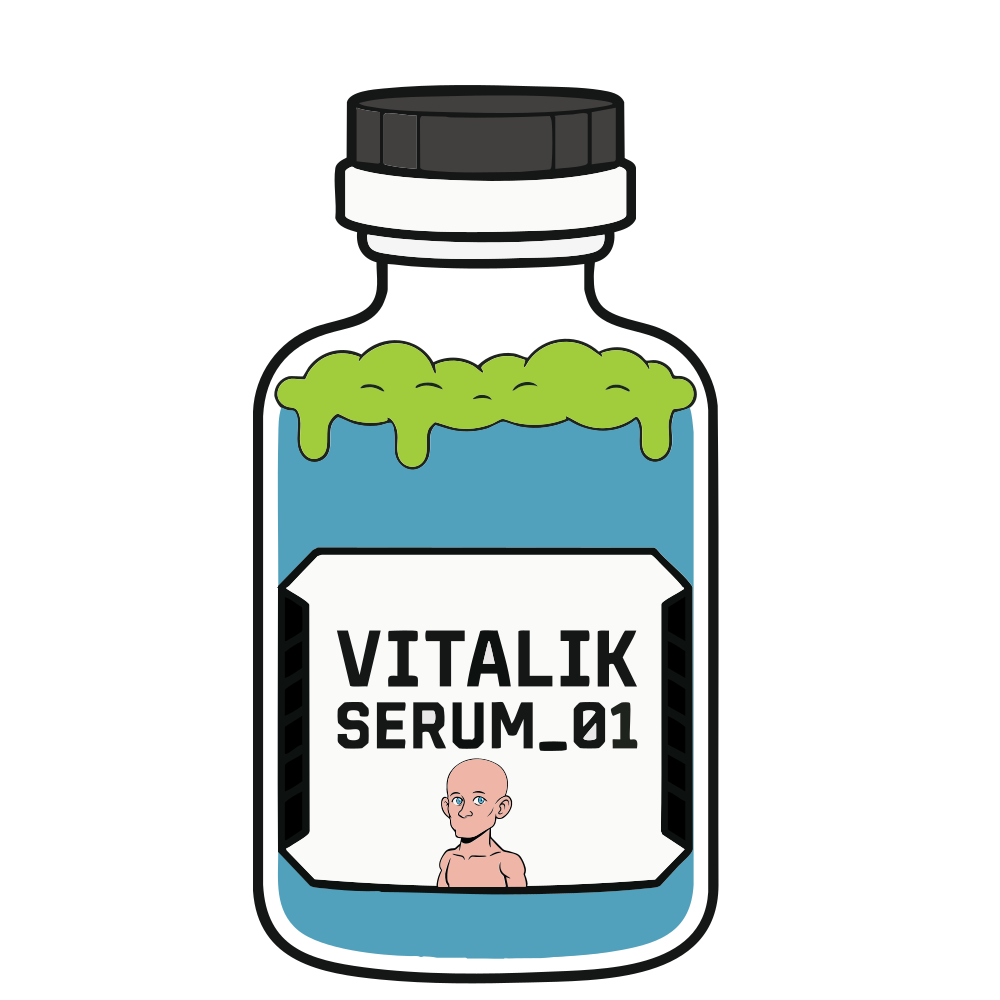 Serum
SerumThe protocol paper separates deployed code, launch operations and future contracts. “Planned” never means “already enforced on-chain.”
Compact DNA, base roll, Hoodie cap, Chop Shop and sequential trait evolution.
SSTORE2 V1 layers, replaceable renderer link, V2/V3 uploads, metadata and special layer order.
One launch Serum per valid mint plus an owner-configurable public Serum round.
Receives ETH, executes approved marketplace calls and routes acquired Vitaliks to a mutable recipient.
Funded OpenSea offers target a full mint-price return. This is treasury execution, not an ERC-721 refund function.
Token accounts, on-chain wearables, holder voting, renderer equipment and the exact 70/30 sale split are implemented as separate contracts.
Mint establishes the archive. Serum opens artist states. Token-bound inventory is a separate expansion after the core launch.
A collector selects five visible inputs. The contract rolls the base, maps linked heads, validates the final DNA, mints the ERC-721, airdrops one Serum and forwards the mint payment to the owner in the same transaction.
The ERC-721 stores DNA and selected version states. `tokenURI` calls the current renderer, which reads SSTORE2 pointers, applies the contract layer order and returns inline SVG metadata.
The canonical trait remains the rarity reference. Later art is recorded as a version of that trait, not introduced as a fake new genesis attribute.
The original trait ID and the rarity reference.
A cleaner or more authored state of the same trait.
A louder state that unlocks only after V2.
Linked heads, Hoodie visibility, DNA uniqueness and sequential evolution are enforced by the contracts and mirrored by every interactive preview.
If DNA validation, ERC-721 mint or Serum mint fails, the whole transaction reverts.
Background and rolled base do not create a new canonical combination; clothing, glasses, Head and Mouth do.
Quirkies and Egg heads map to Normal, Alien, Zombie or Ape after the contract rolls the base.
Hoodie is holder-selected, progressively capped and suppresses Head art plus Head marketplace metadata.
Only clothing, glasses, Head and Mouth evolve. Every later state must exist in the renderer and unlock sequentially.
The ERC-6551 account is derived from the parent token without replacing the ERC-721. Account control follows the current Vitalik owner; the Wardrobe renders only ERC-1155 items actually held by that account.
Artists commit an exact SVG hash. Each Vitalik token can vote once on admission. Accepted work enters the on-chain Shop with a fixed 70% creator / 30% strategy accounting route.
The exit window and royalty strategy are separate. One targets launch-side liquidity; the other uses secondary creator earnings for public acquisitions.
The launch operator plans to place OpenSea WETH offers for 24 hours after sold out. Offer sizing must account for configured marketplace and creator deductions so the seller net targets the original 0.0003 ETH mint price. Availability and execution remain external to the NFT contract.
Inspect strategy